
Explore
Podere il Carnasciale
The Cult of Caberlot: A Collector’s Deep Dive into One of Tuscany’s Rarest Estates
In the universe of fine wine collecting—where scarcity, provenance, and singularity define true desirability—Podere Il Carnasciale occupies a realm of its own. This is not merely a small Tuscan estate producing limited quantities. It is, more remarkably, the sole commercial guardian of an almost mythological grape: Caberlot.
In an era when luxury wines are increasingly shaped by branding, expansion, and market demand, Podere Il Carnasciale represents the antithesis—an estate built patiently, obsessively, and unapologetically around one grape, one place, and one uncompromising vision. For collectors, this is the sort of project that transcends tasting notes and scores. It is about rarity with meaning.
A Hidden Corner of Tuscany: Valdarno di Sopra
Podere Il Carnasciale is located in Valdarno di Sopra, a historic but long-overlooked subzone of Tuscany stretching between Florence and Arezzo. Unlike the sun-baked, postcard-perfect hills of Chianti Classico or the maritime warmth of Bolgheri, Valdarno di Sopra is cooler, higher, and more continental.
The estate’s vineyards sit near Mercatale Valdarno, at elevations ranging roughly from 200 to over 400 meters above sea level. These heights bring wide diurnal temperature shifts—crucial for preserving acidity and aromatic precision in late-ripening varieties.
Soils here are varied and complex:
-
Iron-rich clay in the highest, original parcel
-
Chalky clay and limestone streaks in mid-slope vineyards
-
Sandy, stony compositions in lower sites
For collectors, this heterogeneity matters. It explains why—even with microscopic production—the wines show layered structure, tension, and longevity, rather than sheer mass alone.
The Origin of Caberlot: A Grape That Shouldn’t Exist
Every cult wine begins with a story, but few are as improbable as Caberlot’s.
In the late 1960s, agronomist Remigio Bordini identified an unusual vine growing in an abandoned vineyard near Padua, often associated with the Colli Euganei zone. The vine displayed characteristics of both Cabernet Franc and Merlot—structure and aromatic lift on one hand, depth and flesh on the other.
Rather than being a deliberate cross, Caberlot is widely understood to be a natural, spontaneous crossing—a viticultural accident rescued from obscurity. At a time when Italy was focused on volume and international grapes, this lone vine could easily have vanished.
Enter Wolf Rogosky, whose fascination with the grape led him to secure plant material and establish Caberlot at Podere Il Carnasciale in the mid-1980s, with the first significant plantings dating to 1986. From the beginning, the ambition was not experimentation for novelty’s sake, but serious, long-term fine wine production.
Today, Caberlot remains commercially cultivated only at Podere Il Carnasciale—a fact that alone places the wine in a category of absolute rarity.
The Estate Philosophy: Precision Over Expansion
Podere Il Carnasciale is famously small. The entire estate encompasses only a few hectares, divided into a handful of meticulously farmed parcels. Vine density is high—often cited at around 10,000 vines per hectare—forcing deep root systems and naturally limiting yields.
Key principles define the estate’s approach:
-
Low yields by design, not correction
-
Manual viticulture throughout, with strict selection
-
No pursuit of appellation prestige—the wines are bottled as Toscana IGT to preserve stylistic freedom
-
Patience: Caberlot is not rushed, in the vineyard or cellar
Production numbers vary by vintage, but they are consistently tiny—often measured in mere thousands of bottles, not cases. For collectors, this scarcity is structural, not artificial.
The Wines: Il Caberlot and Carnasciale
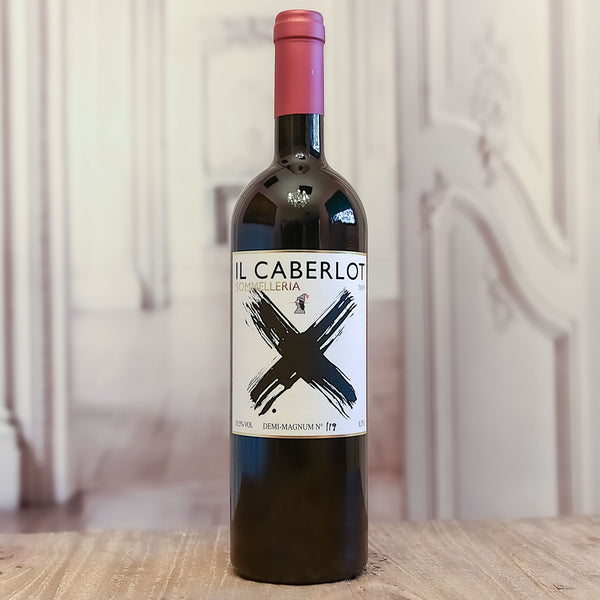
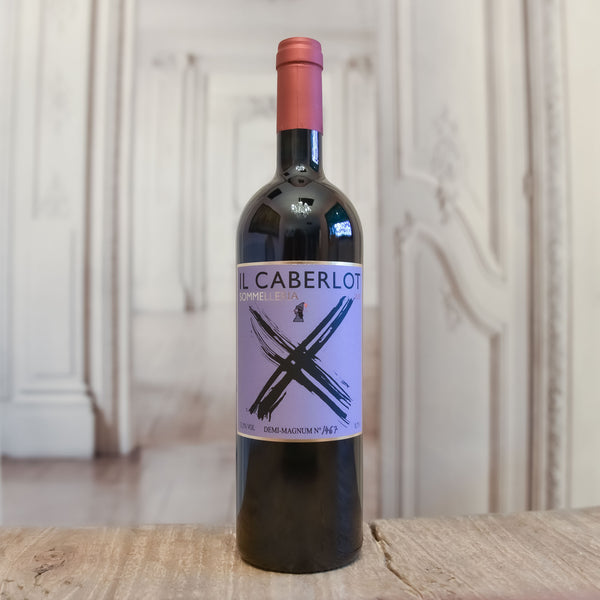
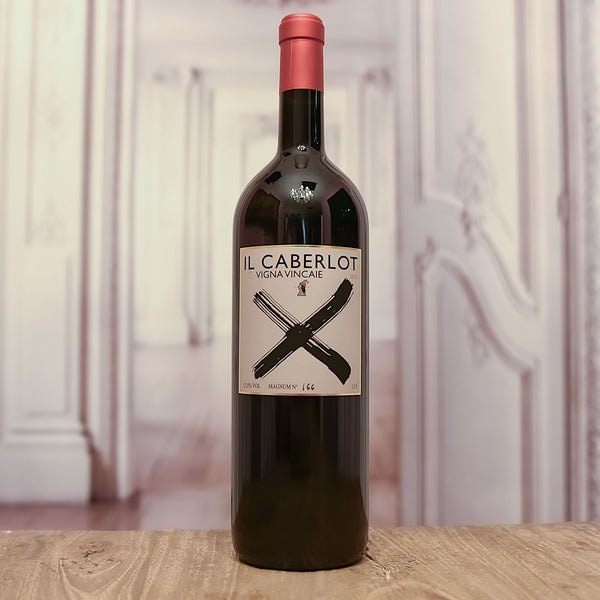
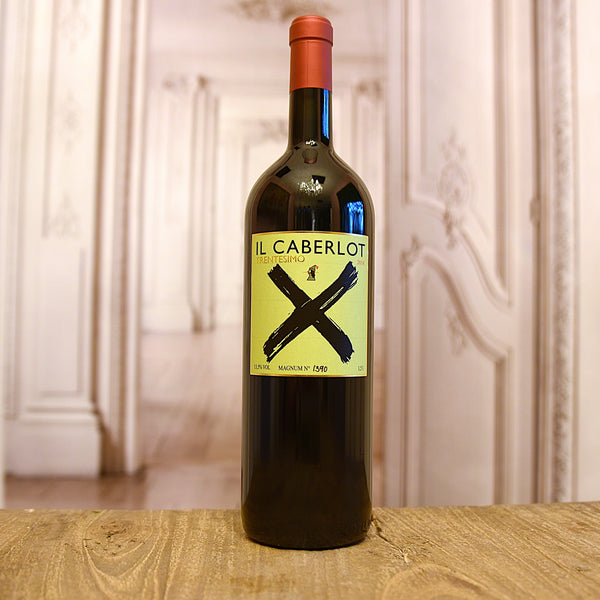
Il Caberlot Toscana IGT
Il Caberlot is the estate’s flagship and the reason for its global cult following. Typically produced from 100% Caberlot, it is a wine that defies easy comparison.
On release, Il Caberlot is often:
-
Deeply colored, almost opaque
-
Aromatically intense, with blackcurrant, dark cherry, graphite, iron, wild herbs, and balsamic undertones
-
Structurally formidable, with dense tannins and a core of acidity that signals long life
What distinguishes Il Caberlot for collectors is its aging trajectory. Youthful bottles can appear monolithic; patience reveals nuance. With time, the wine often develops savory complexity—leather, tobacco, truffle, dried flowers—without losing its dark-fruited core.
It is not unusual to see top vintages discussed in the same breath as elite Super Tuscans, yet Il Caberlot remains fundamentally different: there is no substitute, no comparable producer, no alternative terroir.
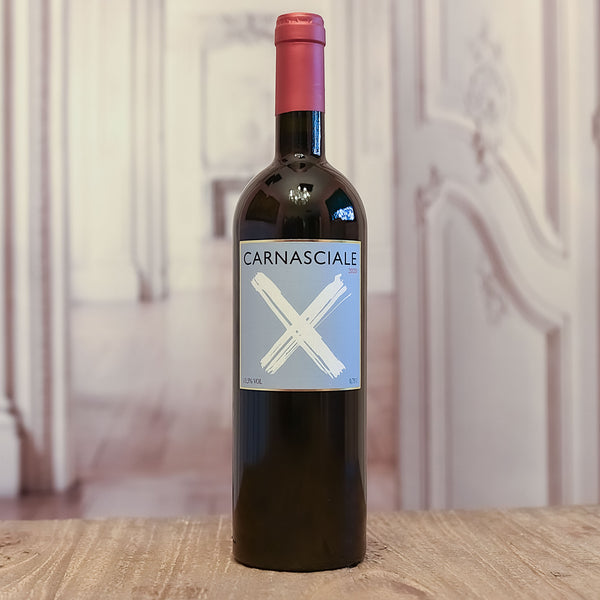
Carnasciale
Often referred to simply as Carnasciale, this second label is produced from the same grape but selected for earlier approachability. While still serious and ageworthy, it offers collectors:
-
A more accessible entry point stylistically
-
Earlier drinking windows
-
Insight into Caberlot’s character without waiting decades
Even so, quantities remain extremely limited, and availability is often sporadic.
Caberlot in the Glass: Why Collectors Care
From a collecting perspective, Caberlot checks every meaningful box:
1. Absolute Scarcity
This is not a wine made scarce by marketing—it is scarce because the estate physically cannot produce more without betraying its philosophy.
2. Genetic Uniqueness
Unlike Cabernet, Merlot, or Sangiovese, Caberlot is not planted elsewhere at scale. You are collecting something fundamentally irreplaceable.
3. Proven Aging Ability
Well-stored bottles from strong vintages have demonstrated the capacity to evolve gracefully over 20–30+ years, placing Il Caberlot firmly in long-term cellar territory.
4. Insider Status
Podere Il Carnasciale has never chased mass recognition. Its reputation has grown through sommeliers, collectors, and serious critics—making ownership feel like participation in a quiet, informed circle rather than a trend.
A Wine Outside the System—and Proud of It
One of the most telling aspects of Podere Il Carnasciale is its relationship with classification. Despite its pedigree, the estate has never pursued DOCG status or conformity to regional norms. Toscana IGT is not a compromise here—it is a declaration of independence.
In a world increasingly shaped by uniformity, Caberlot remains stubbornly individual. It is not Bordeaux. It is not Bolgheri. It is not Chianti. It is simply—and only—Caberlot from Podere Il Carnasciale.
Final Thoughts
Podere Il Carnasciale is not a wine you buy casually, and it is not a wine you flip easily. It is a conviction purchase—for collectors who value originality, patience, and authenticity over immediate gratification.
To own Il Caberlot is to own a chapter of Italian wine history that nearly never happened: a grape rescued from obscurity, nurtured in a singular terroir, and entrusted to time rather than trend.